
Notes from the Geek Show

... rantings, ravings and ramblings of strange fiction writer and carnival freak, Hal Duncan

Friday, May 24, 2013

The Longest Con

The morality of the penitent.

The dogma that you can be a total cuntfucker and yet still earn eternal bliss if only you perform the prescribed rituals of obeisance.

To the honest man, it is surely baffling to see the pious cleave to a creed of such transparent ethical bankruptcy. But as any hustler knows, the softest mark is the amateur hustler. The easiest rube to grift is the rube who thinks they're grifting someone else. Dangle a way to game the system in front of them and they're yours. And the beauty of the long con of absolution is that, as with any such con, the mark can never admit that they've been scammed, because to do so would reveal their own chicanery. So the scam is protected from exposure.

Religion, the longest con of all, is the perfection of this hustle, the pitchman at the In-and-In performing and eliciting a buy-in of belief. Their very judgement invested, the sucker is taken for the faculty of ethical evaluation itself, can no longer recognise that they've been hoodwinked, let alone admit it to themself, let alone admit it to others. So those most wholly hornswoggled become shills in the next running of the swindle, willing accomplices of the confidence artist, the conviction they can never question lending sham legitimacy to the flimflam.

There are only shills, in fact, this long con having outlived whatever bunco steerer first began it, become a self-sustaining, self-propagating system requiring no magnificent bastard at the head of it all to run the show. The only sharpie at the apex of this predatory scheme is the system itself, its profit the very continued existence that it lures the mark with. Reaping eternity in the long con's endless self-reiteration, this is the Empire.

This is why it never ended.

Tuesday, May 21, 2013

Story's End at the Edinburgh Fringe


Click through for the trailer cut together by Johnny Barrington from footage of the CCA gig, including some shots of Yours Truly from my film debut as Naked Crazy Pictish Hobo Writer. Don't worry, all the shots used here are SFW. But yes, that's me standing naked on a moor. On Skye. In January.

No doubt I'll link to listings and prices and places to buy tickets as and when, but for now all you need to know is Edinburgh Fringe, August 14th-18th, 11.30pm, at the Anatomy Theatre, Summerhal. You won't be disappointed.

UPDATE: Doh! Oh, so there is embed code for Vimeo. I managed to not find that when posting initially. So sod it, here ye go. No need to click through even.


STORY'S END - DEAD MAN'S WALTZ from johnny barrington on Vimeo.

Wednesday, May 15, 2013

Cardinal O'Brien on Craggy Isle

Good friend and GSFWC cohort Phil Raines pointed me to this news story on disgraced anti-gay Cardinal "Handsy" O'Brien leaving Scotland to do penance, with a joke about him ending up on Craggy Isle from Father Ted. All I can think of now is a scene playing out like this:

KEITH: Look, Dougal, remember what I told you... those handsome young men over there are far away. The ones over here are small. Far away... small. Far away... small.
DOUGAL: Gotcha, Keith.
KEITH: And why are they small, Dougal?
DOUGAL: Because they're midgets, Keith. They're sexy midgets.
KEITH: No, Dougal. Because they're boys. Jesus, Dougal, can ye not tell from the gym shorts?
DOUGAL: Sure and I thought they were just sporty sexy midgets. Or midget acrobats. They're quite bendy when ye get them--
KEITH: --No, Dougal. They're boys. And what don't we do with boys, Dougal?
DOUGAL: We don't tell their parents, Keith.
KEITH: That's right, Dougal--I mean, NO. No, we try not to touch them, Dougal.
DOUGAL: Pffft! Sure and we can try, Keith. But we're not very good at it, are we? Why, even yerself--
KEITH: --I've told ye before, Dougal. That hand was only resting on Father Peter's arse. And it's not the same; Father Peter's a grown man anyways.
DOUGAL: Sure and he's definitely not a midget, if ye know what I mean, Keith. He's quite sexy though, wouldn't ye say, Keith? You must've thought he was--
KEITH: Look, Dougal. Father Peter isn't the subject under discussion. Can ye just try and remember that the ones in the gym shorts are not sexy midgets?
DOUGAL: But what if they're not wearing gym shorts, Keith? I mean, if they're in the showers, Keith, how do I know they're not sexy midgets?
KEITH: Well, Dougal, the midgets would have hair on--NO, enough, Dougal. We shouldn't even be talking about this. Sodomy's a sin, Dougal; ye know that, don't ye... especially with young boys?
DOUGAL: Oh, yes, Keith. Sodomy's a sin.
KEITH: And ye know what sodomy is, Dougal?
DOUGAL: Oh, yes, Keith.
KEITH: You remember the story of Sodom, Dougal? In the Bible.
DOUGAL: Sure, Keith. That's an amaaaaazing story.
KEITH: Ye know which story I'm talking about?
DOUGAL: Oh, yes, Keith. That's my favourite one.
KEITH: Are ye sure ye remember it, Dougal?
DOUGAL: How could I forget it, Keith? It's the best Bible story ever. Those two angels going undercover into Sodom, and killing all those bad people when they come for them. The way they shoot their way out at the end. [makes machinegun noises] When they're on the bus, and there's all the explosions!
KEITH: Dougal, I don't think that's the right--
DOUGAL: --And that bit where one angel pretends to be a baddie, and they're all sitting round the big table in the castle, and he has a notebook with all the names of the spy angels in it. Sure and it fools me every time, Keith. I always think he's secretly a baddie.
KEITH: Dougal, that's Where Eagles Dare. You're thinking of Sir Richard Burton in Where Eagles Dare.
DOUGAL: That's right, Keith. The Archangel Richard Burton. In Where Eagles Dare. That's an amaaaaaazing Bible story.
KEITH: Dougal, that's not a Bible story. It's about Nazis.
DOUGAL: But I thought we were Nazis, Keith. Like His Holiness.
KEITH: No, Dougal, that was the last Pope. And I've told ye before... priests aren't Nazis.
DOUGAL: But we wear black uniforms, Keith, just like the SS. And we hate the Jews and the homosexuals, don't we?
KEITH: No, Dougal, how many times do I have to tell ye? We hate the sin, not the sinner. You do understand that, don't you, Dougal?
DOUGAL: Oh, yes. Keith. Absolutely. Message received, loud and clear, Keith. Yes. I understand.
KEITH: Do, you really, Dougal?
DOUGAL: No, Keith.
KEITH: [sighs] Oh, what are we going to do with you, Dougal?
JACK: DRINK! FECK! ARSE! BOYS!
KEITH: And just you stay out of this, Father Jack! You're the last one to be speaking on the sin of sodomy.
JACK: FECK OFF!

Friday, May 10, 2013

ERRATA: OUT NOW


A way away over fields of illusion is this city, far ago & now here, on the edge of blueblack night & sea...

Built by bitmites in an afterworld of myth & history, the city has been known by many names in its time—Urauk, Enoas, Babalon, Atlantium, Byzantis, Arom. Its truest name though is Errata, an apt name for a city in which language itself has been unleashed to shatter & reshape identity, where even space & time are in flux.

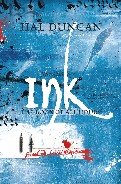
Collecting for the first time, and revising for this edition, all four stories in the ERRATA sequence—“The City of Rotted Names,” “The Prince of End Times,” “The Whenever at the City's Heart,” & “The Tower of Morning's Bones”—this chapbook is a cubist collage of wordplay & worldblazing, a mosaic narrative of the battle for the city of the soul. Here, fans of VELLUM & INK can delve deeper into the mythos of The Book of All Hours, while new readers will find a stand-alone story, a wild ride into the worldscape of a work described as “the Guernica of genre fiction."

Click through to read a preview and order it now from Lulu.

Forward your email order receipt from Lulu to hal AT halduncan DOT com for a PDF for use on e-readers.


Tuesday, May 07, 2013

Dummies Indeed

Just a quick note to help clear something up publicly for a writer who emailed me earlier today, anxious about an accusation of plagiarism. As you'll see on the LiveJournal post linked, Alley Maxwell is a poet with a collection recently self-published via Lulu, THE FAULT OF NARCISSUS. One poem in this collection, "Auditory Hallucinations," contains the lines "where angels shatter angels / down like rain," which some automated doohickey, by the looks of it, matched to a line in something posted online back in 2008. Cue the linked LiveJournal post crying plagiarism on the basis of this match.

Cue the anxious email from Alley, worried that while she hadn't read any of my poetry, there might be some remote chance that she'd inadvertently appropriated a line of mine; if so, she'd very much like to know so she could address this, apologize and remove said material. The post doesn't specifically mention me, but at a quick glance the first screenshot is sourcing the matched line to a work called "Vellum," so I guessed Alley was familiar with my novel and worried that some exact phrasing had stuck in her mind, snuck into the poem.

So, kudos to Alley in the first instance for being a mensch about it, contacting me to check, and very clear in her desire to make amends if she was at fault in any way. But most importantly:

That line is definitely 100% NOT mine.

I didn't recognise it as a line in anything I've ever written, and while I do actually have an image of an angel shattering in ERRATA, I was pretty sure I wouldn't have ever had occasion to phrase something exactly that way. Still, my memory being shite, I double-checked with a Spotlight search on my MacBook, just to make sure. Nada. That exact phrasing does not occur anywhere in my writings, published or unpublished.

Curious about it then, I took a closer look at the LiveJournal post, realised the first screenshot had another line, "and thieves and hunting south and gravings," and that the "Vellum" the software was sourcing it to was actually a "vellumpoem." Given the use of "gravings" as keyword for a core conceit in the novel, that made for an obvious hypothesis: the software was actually picking up on a poem by a reader inspired by the novel, riffing on it in a wholly legitimate way. Given Alley's titling "Of Blood and Ink," the way these two substances are also key images in VELLUM, I wondered if perhaps the software was simply picking up on an earlier draft of her own work, published somewhere online.

Which is indeed the case, it seems. Alley has indeed read VELLUM, and she did indeed post work online way back when, and it's that which the plagiarism software picked up on. Alley is entirely innocent of plagiarising me, and far from being a victim of some shameless rip off on her part, I'm rather flattered to see the hints of influence in her imagery. Actually, I had a quick gander at the ToC of her collection and it looks rather intriguing. Seeing as I'm a huge fan of Guy Davenport and all, anyone who titles a work in Greek is alright by me.

So yeah, case closed as far as I'm concerned. The title of that LiveJournal post is apt, as the plagiarism software... that's the dummy in question. It clearly wasn't smart enough to know that the previously published work Alley was not infringing was in fact her own. And the moral of the story is: it would be smart to keep that in mind before throwing accusations about, if the person doing so doesn't want to look a bit foolish themself.

I'll also quietly point out that what likely is a copyright infringement is the presumably unauthorised publication of Alley's poem in that LiveJournal post. Just saying.

As you were.

Sunday, May 05, 2013

Performative Morality

“Personally, I don’t believe that you can live an openly homosexual lifestyle, or an openly, like premarital sex between heterosexuals. If you’re openly living that type of lifestyle, then the Bible says you will know them by their fruits. It says that, you know, that’s a sin. If you’re openly living in unrepentant sin, whatever it may be, not just homosexuality, whatever it maybe, I believe that’s walking in open rebellion to God, and to Jesus Christ.”
-- Chris Broussard


Openly Living

It's telling that Broussard uses "openly" four times in his sour-minded cavilling at Jason Collins, the first out gay player active in the NBA--in pro sports in general in the US. It's telling that Broussard generalises to any "unrepentant sin, whatever it may be," in order to construct an additional sinfulness common to all sins committed thus, all sins committed openly. For Broussard there may be a sin of sodomy, and a sin of greed, and a sin of sneering at puppies, and a sin of saying "Jehovah" five times while looking in a mirror--or whatever--but what he chooses to focus on is not these specifics but the over-and-above-that sin of "open rebellion." Not even rebellion per se, but open rebellion.

Walking in Open Rebellion

To stride out of the closet! Not just to cower inside it, hidden, but to stride out, to be seen! This is the sin of an "insult to God" performed non-verbally, in gesture rather than in word. It's body language blasphemy. For a Broussard, it's not just the action in and of itself that is damnable; rather the more objectionable wrongness lies in the perception of that action by the moral authority, the outrage experienced by that moral authority to see its authority defied. It is the overtness of the challenge to moral authority Broussard bridles at in priggish sanctimony, whatever the sin, great or small, "whatever it may be, not just homosexuality, whatever it maybe." A Broussard does not focus on the deed performed behind a closed door, but on the audacity of stepping out afterwards, wearing one's sin without shame.

Whatever It May Be

"Masturbation or murder?" one might ask. "Whatever," a Broussard will say, the differences of deeds swept from his regard, the deeds themselves erased in equivalence. Such details do not matter in the performative morality of those for whom ethical judgement is abrogated to the eye of the allotted arbiter(s). It's not like they understand the details, exactly why this is forbidden and that required--how can they, having abrogated ethical judgement? (Hence their acceptance of even the most absurd and arbitrary--even patently unjust--injunction.) It's only logical then that the imperative they focus on is not this or that proscription or prescription of this or that activity as set out in their patchwork rulebook, but the one clear and indisputable axiom, the prime directive that serves as linchpin to the rulebook itself: not to insult the arbiter with defiance. With that sin, whatever it may be, it is the conspicuousness that is for Broussard the locus of offense.

By Their Fruits

Note how Broussard twists the Biblical stance that the sinner will be apparent in the consequences of their actions. The idea that "you will know them by their fruits" is hardly difficult to comprehend. It's simplistic as ethics, but that by definition makes it simple: look to the practical impact of a person's behaviour, to the products of their attitude and beliefs, and where that impact is self-evidently negative, well, clearly that person's attitude and beliefs are flawed, fraught with the error of hamartia, the stumbling block of a skandalon--these the original Greek terms of the Gospels. For Broussard, this becomes: if you can look at them and see that they're doing something forbidden, that is a sin--the very fact that you can see them, "you know, that's a sin." His articulation is barely coherent, but what follows makes it clear. For Broussard, the "fruits" are not the negative consequences of an ethical failing, only the signifiers put out on display.

That Type of Lifestyle

It is an expedient blinder, this body language blasphemy, this sin of refusing to perform a morality one does not understand. Since a Broussard, having abrogated ethical judgement, always already does not understand the morality to be performed, a Broussard is bound to fail in following that inherently contradictory rulebook. But always already understanding this one thing--that above all else he must not openly defy morality--as long as a Broussard performs the correct "type of lifestyle" in that respect... well then, he is a good man in his faithful adherence, only a weak one. All specific sins are facilitated by this performative morality. As long as a Broussard is styling his life as pious in the performance of obedience, eschewing the overt display of defiance, he is at least not as damnable as the openly whatever.

In Unrepentant Sin

It is the Hypocrite's Gambit, this diversionary focus on the exterior, on the superfices of the lifestyle that enact propriety or impropriety. What is so convenient for a Broussard about performative morality is that the self-presentation serves as a shibboleth, a signifier of a baseline attitude either opposed to the Social Order or reverent of it. And dependent on this fundamental stance of impiety or piety, one's misdeeds become either characteristic or uncharacteristic. Even as the misdeeds of the openly sinful are seen as symptomatic of their impious defiance, that is to say, those of the hypocrite are cast as aberrations, fleeting failures of the essentially devout. If a Broussard surrenders to temptation, secretly and shamefully, still they can point to their willing spirit, to the profound piety that bedrocks their morality, their ardent fealty to the arbiter's authority; in weak flesh they may have failed, but they are not rebels, not "openly living in unrepentant sin." Not like that Collins character now flaunting the arbiter's axioms.

I Believe

This is what makes the Hypocrite's Gambit so effective, what makes a Broussard so secure in his folly: the performance is not aimed simply at deceiving the arbiter's gaze but at persuading the hypocrite himself of his own basic virtue. A Broussard could have sucked more cocks than Collins has ever seen in all his years in the locker rooms, and he'd likely still believe himself a better man because of his baseline attitude of unquestioning deference, every cringing twinge of shame paradoxically a proof of his righteousness. To stand tall in the performance of morality while crawling inside in abject self-mortification... this is exactly what the arbiter asks of us, as a Broussard understands it. Never mind what the Bible actually says about such self-delusions of propriety:

"Woe to you, teachers of the law and Pharisees, you hypocrites! You clean the outside of the cup and dish, but inside they are full of greed and self-indulgence. Blind Pharisee! First clean the inside of the cup and dish, and then the outside also will be clean. Woe to you, teachers of the law and Pharisees, you hypocrites! You are like whitewashed tombs, which look beautiful on the outside but on the inside are full of dead men's bones and everything unclean. In the same way, on the outside you appear to people as righteous but on the inside you are full of hypocrisy and wickedness."
--Mathew 23.25-28

Tuesday, April 30, 2013

Queers Dig Time Lords

Table of Contents

Introduction, by John and Carole E. Barrowman
Editors’ Foreword, by Sigrid Ellis and Michael Damian Thomas

The Monster Queer is Camp, by Paul Magrs
Time, Space, Love, by Emily Asher-Perrin
Seven Ways of Looking at Captain Jack, by Mary Anne Mohanraj and Jed Hartman
Born Again Whovian, by David Llewellyn
Queer Doctor vs. Straight Trek?, by Paul Cockburn
Sub Texts: The Doctor and the Master’s Firsts and Lasts, by Amal El-Mohtar
Nice TARDIS, by Jason Tucker
The Incredibly True Adventures of an Intellectual Fan Dyke, by Sarah J. Groenewegen
Bi, Bye, by Tanya Huff
In Praise of Mature Women, or Why Donna Noble and River Song Totally Need to Call Me, by Jennifer Pelland
We’re Here, We’re Queer, Rate Us on iTunes, by Erik Stadnik
Secrets and Lies, by Scot Clarke
Long Time Companions, by Melissa Scott
Jack Harkness’s Lessons on Memory and Hope for Cranky, Old Queers, by Racheline Maltese
My Straight Best Friend, by Nigel Fairs
A Kiss from Romana: Lesbian Subtext in The Stones of Blood, by Julia Rios
Bothersome Otherness, by Martin Warren
PVC Made Me a Gay, by Gary Russell
Torchwood, Camp, and Queer Subjectivity, by Brit Mandelo
The Doctor: A Strange Love, Or: How I Learned to Stop Hating and Love the Who, by Hal Duncan
A Man is the Sum of His Memories, by Neil Chester
Spoilers: A Letter to Myself, Age 16, by Kaia Landelius
The Heterosexual Agenda, by John Richards
Hey, Mickey, You’re So Fine, by Naamen Gobert
Tihaun Mutants, Monsters, Mutts, and Mentiads, by Cody Quijano-Schell
Same Old Me, Different Face: Transition, Regeneration, and Change, by Susan Jane Bigelow
The Girl Who Waited (for the Guidance Counselor to Get to His Point), by Rachel Swirsky

People may pre-order Queers Dig Time Lords at Amazon, Amazon UK, Amazon CA , Barnes & Noble, or IndieBound. It will be released on June 4th. (Early copies will be available at the Wiscon convention launch.)